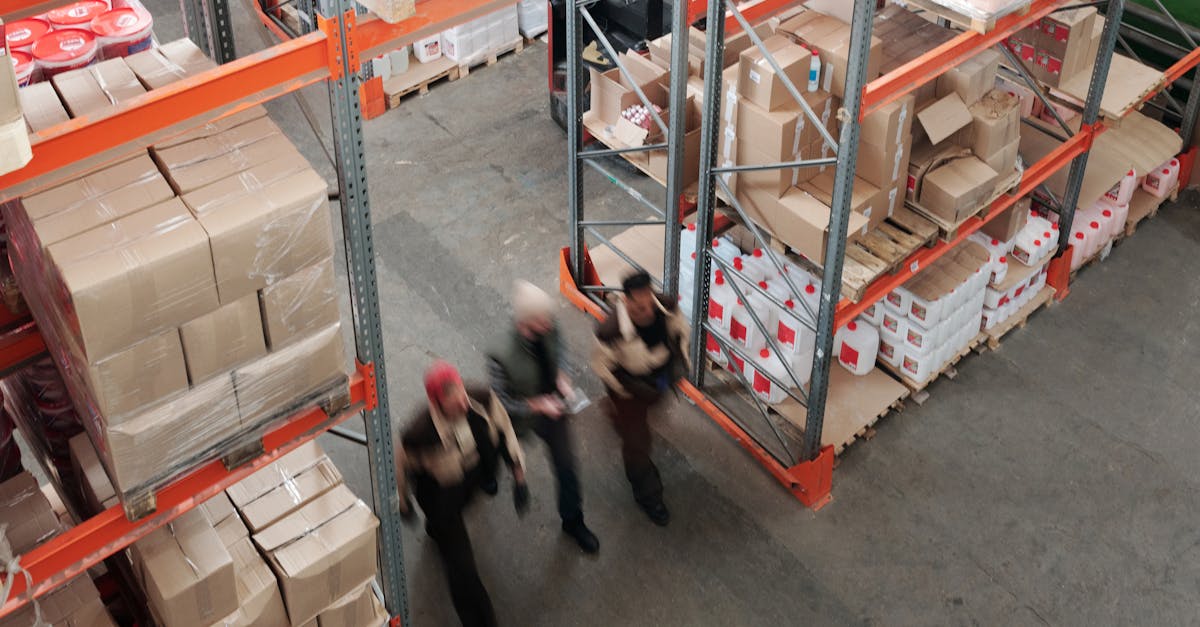
Managing a warehouse that serves multiple brands brings a unique set of challenges. According to Octasyn, coordinating packing, labeling, and maintaining EDI compliance across different product lines, each with their own unique requirements and customer expectations, can test even the most seasoned logistics teams. Here are actionable best practices to help streamline multi-brand warehouse management with pinpoint accuracy.
Understanding the complexities of multi-brand operations
When your warehouse acts as the fulfillment hub for diverse brands, each with their own SKUs, packaging standards, order sizes, and compliance demands, you're balancing a high-wire act between efficiency, accuracy, and customer satisfaction. Common pain points include:
- Inconsistent packaging and labeling standards across brands: A single generic process can't accommodate every brand's specific requirements simultaneously.
- Different retail partners and EDI requirements per brand: One brand's retail relationships may differ entirely from another's, multiplying the compliance surface.
- Staff needing to context-switch between brand-specific rules throughout a shift: This increases the risk of applying the wrong process to the wrong brand.
- Order volumes and seasonality that vary independently by brand: A demand spike for one brand can strain shared warehouse resources unevenly.
1. Establish rigorous order management and allocation rules
The foundation of efficient multi-brand fulfillment lies in smart order management. This means leveraging automation wherever possible to bring discipline, transparency, and error reduction to the process.
- Route each order automatically to the correct brand-specific workflow at intake, not through a manual sort
- Apply allocation rules based on ship date, brand priority, and retailer compliance urgency together
- Flag an order with ambiguous or conflicting brand data before it enters the physical workflow
2. Precision in packing: reducing errors and boosting efficiency
The packing stage is where details matter. With multiple brands in play, accurate packing processes drive both customer satisfaction and regulatory compliance.
- Use scan-based verification at pack time to confirm the correct brand's items and packaging are being used
- Apply brand-specific packaging standards automatically based on the order's brand designation
- Build a visual station reference showing the correct packaging for the brand currently in process
3. Mastering labeling: cartons, pallets, and compliance
Label accuracy is a make-or-break factor for both compliance and efficient deliveries. With varying label requirements, UCC-128, GS1, FedEx, UPS, across brands and trading partners, automation and customization are critical.
- Generate carton and pallet labels automatically using the correct brand and retailer-specific template
- Validate label content against both the brand's standard and the retailer's requirement before printing
- Update a brand's label template centrally so every downstream shipment reflects the current standard
4. Seamless EDI compliance across brands
Every retailer, wholesaler, or channel partner may require different EDI document flows and data content, from purchase order acknowledgments and advance ship notices to invoices and routing guides. Ensuring EDI compliance at scale, especially for multi-brand warehouses, requires three core strategies.
- Map each brand's specific trading partner relationships and EDI document requirements individually
- Automate document generation from a single validated data source per brand and retailer combination
- Monitor compliance metrics separately by brand to catch a brand-specific issue before it compounds
5. Integration with carriers and third-party logistics providers
Multi-brand fulfillment often means working with a range of shipping carriers and 3PLs, each with their own routing instructions and documentation standards. Integrating these providers into your workflow enables you to stay nimble as business grows.
- Connect carrier and 3PL systems directly to your order and label workflow, not through a manual handoff
- Apply the correct carrier-specific documentation automatically based on the brand and retailer combination
- Add a new carrier or 3PL relationship by extending the existing integration rather than rebuilding it
6. Effective resource allocation and team training
Your warehouse team is the engine driving operations, and their ability to flex between brands and processes determines your accuracy rate and throughput speed.
- Train staff on brand-specific nuances individually, not through a single generalized onboarding
- Allocate labor dynamically based on real-time volume across each brand rather than a fixed daily assignment
- Cross-train staff across multiple brands to build flexibility without sacrificing accuracy
7. Leveraging real-time data and analytics
Multi-brand warehouse optimization is an ongoing process. Access to real-time metrics allows you to spot inefficiency, reduce costs, and rapidly adapt to changing partner demands.
- Track accuracy, throughput, and compliance metrics by brand, not just in aggregate
- Identify a developing bottleneck specific to one brand before it affects the broader operation
- Use historical brand-level data to plan staffing ahead of a known seasonal spike
In practice: lessons from high-volume multi-brand operators
Organizations like Nakoma Products (managing Endust, Preval, and Rit Dyes) and Razor USA have trusted this approach to simplify their multi-brand warehousing.
- Centralizing data while automating brand-specific workflows scales more cleanly than maintaining separate systems per brand
- Tracking compliance metrics by brand catches an issue early instead of letting it blend into an acceptable overall average
- Cross-trained, well-supported staff adapt faster to a sudden shift in demand between brands
Actionable takeaways for your warehouse team
- Automate order allocation, packing verification, and labeling per brand rather than relying on manual judgment
- Map EDI requirements individually by brand and retailer combination, not as one generic compliance set
- Track every key metric, accuracy, throughput, compliance, by brand specifically
- Invest in brand-specific training and cross-training to keep the team flexible under changing demand
As the multi-brand logistics landscape grows more complex, success will increasingly depend on your ability to customize, automate, and remain nimble without sacrificing compliance or customer satisfaction.
Frequently asked questions
What is the biggest operational challenge in multi-brand warehouse fulfillment?
Balancing efficiency, accuracy, and customer satisfaction across brands that each have their own SKUs, packaging standards, and compliance demands, since a single generic process can't accommodate all of them simultaneously.
Why should EDI compliance be mapped separately by brand rather than as one generic set of rules?
Each brand may have entirely different retail partner relationships and EDI document requirements, so a single generic compliance approach misses the actual variation that exists across brands.
How can a warehouse reduce packing errors across multiple brands?
Using scan-based verification at pack time to confirm the correct brand's items and packaging, combined with a visual station reference for the brand currently in process, significantly reduces cross-brand mistakes.
Should performance metrics be tracked by brand or in aggregate?
By brand specifically. An aggregate view can hide a brand-specific issue behind an acceptable overall average, delaying the identification of a developing problem.
What role does staff training play in multi-brand warehouse success?
Training staff on brand-specific nuances individually, and cross-training them across multiple brands, builds the flexibility needed to adapt quickly when demand shifts unevenly between brands.
Simplify multi-brand warehousing without sacrificing compliance. See how Octasyn automates order management, labeling, and EDI for every brand you fulfill.
Talk to a shipping expert