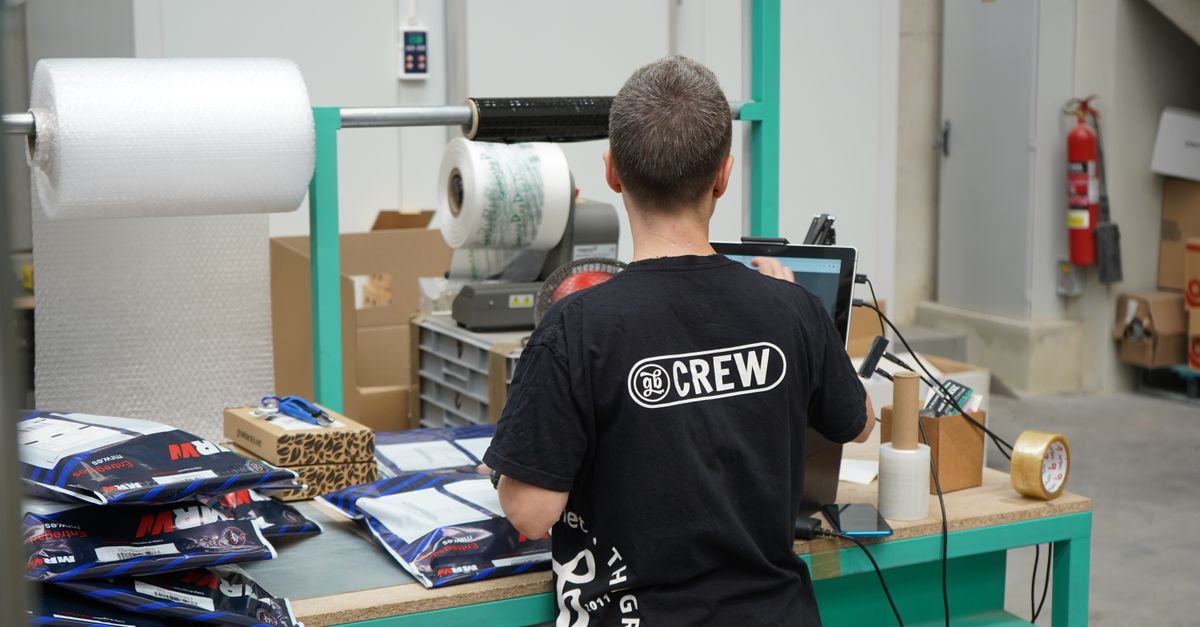
Separating warehouse shipping confirmation (EDI 945) from customer Advance Ship Notices (EDI 856) is essential for compliance, label accuracy, and speed in retail fulfillment. When EDI 945 and EDI 856 are merged or confused, businesses risk shipping errors, chargebacks, and breakdowns across their supply chain. In this guide, we show how a clean record handoff protects inventory integrity, powers automation, and drives better retailer relationships.
Why EDI 945 and EDI 856 Serve Distinct Purposes in Fulfillment
The EDI 945 is the warehouse’s official shipping confirmation—recording exactly what quantities, cartons, and tracking numbers left the building. The EDI 856, or Advance Ship Notice (ASN), is the supplier’s notification to the retailer or customer, telling them what to expect for receipt and when. Mixing these two can lead to errors because the 945 serves as the execution record, while the 856 is a promise to the customer.
Maintaining a structured sequence—first the 945, then the 856—guarantees every shipment is reconciled against physical movement before messaging the end customer. This approach improves ASN compliance, aligns invoices to what was shipped, and supports consistent inventory reporting across ERPs, WMS, and 3PL integrations. Platforms like Octasyn enforce this separation as a critical best practice for all EDI-driven warehouse teams.
EDI 945 is a shipping confirmation sent by the warehouse or 3PL back to the order owner. EDI 856 is the ASN sent onward to the buyer, retailer, or receiving destination, based on what the warehouse confirmed was shipped.
The Impact of Separating Shipping Confirmation from the ASN
Operational clarity matters. The 945 is triggered once goods are packed, labeled, and shipped—finalizing what actually left the dock. Only then should the 856 be created, reflecting those details faithfully for receiving, routing, and compliance at the retailer end. This structure allows businesses to:
- Eliminate discrepancies between what was shipped and what the customer expects by aligning ASNs with real shipment data
- Reduce errors and manual rework for invoices, packlists, and bills of lading downstream from shipment
- Protect against chargebacks, appointment rejections, and costly shipment delays due to mismatches
- Ensure that carrier tracking and carton detail accurately flow into customer-facing documents
- Enable automation and bulk processing of EDI orders at scale via solutions like Octasyn
Comparison: 945 vs 856 in the Octasyn Workflow
| Purpose/Field | EDI 945 (Warehouse Confirmation) | Octasyn Implementation |
|---|---|---|
| When Triggered | After pick, pack, and ship completed | Records final shipment events before producing any customer ASN |
| Core Content | Shipped quantities, carton IDs, carrier info, tracking/PRO | Captures full detail, held as authoritative until ASN and downstream docs are created |
| Next Action | Sent to order owner/brand; not the customer | Octasyn automatically builds compliant 856, labels, packlists, and invoices off this confirmation |
| Error Correction | Locked once shipment is booked | Allows post-ship edits and partials before ASN transmission, supporting backorders and split loads |
| Outcome by Layer | Drives inventory and fulfillment reconciliation | Enables bill of lading, ASN, and invoice with synchronized content for zero misalignment |
How Warehouse and Customer Documentation Should Flow
-
01
Order Import and Allocation The ERP, order management system, or EDI 940 generates shipment instructions to the warehouse or 3PL.
-
02
Pick, Pack, Label, Ship Warehouse staff execute fulfillment, applying all required UCC/GS1/carton labels and generating carrier documents.
-
03
Send 945 Confirmation The finalized record, including carrier info and tracking, is sent back upstream. In Octasyn, this closes out all execution-level events for the shipment.
-
04
Generate ASN (856) The supplier-facing system (Octasyn or ERP) builds a compliant ASN based on the confirmed 945 details and trading partner rules. This is then pushed immediately to the buyer/retailer.
-
05
Transmit Invoices, Packlists, BOLs All related documents take their data from the same confirmed record, removing manual entry risk.
What Goes Wrong When 945 and 856 Are Confused
Businesses that skip or blend these steps often experience higher error rates and costly compliance failures. Common pitfalls include:
ASNs showing more or fewer items than physically shipped, causing receiving exceptions at the customer dock.
ASN lacks carrier or tracking data, which is typically only known once the warehouse ships and records the 945.
Retailers penalize misalignment between shipped data and ASN, impacting margins and supplier scorecards.
Teams have to manually reconcile what was shipped versus what was transmitted, introducing additional delay and opportunity for new errors.
Best Practices for Reliable EDI Shipping and ASN Generation
- Let the warehouse finalize the 945 before building any ASN. Never generate an 856 from a pre-ship plan or ERP order alone. Use only actual shipped records as your data source.
- Automate compliance mapping by trading partner. Apply retailer-specific rules, label layouts, and ASN structures after the shipment is confirmed and before transmission.
- Leverage integrated solutions for all downstream documents. Packlists, BOLs, and invoices should all pull shipping data from the confirmed 945 event, ensuring alignment.
- Validate content before release. Every ASN and label should match actual shipment attributes—including quantities, carton IDs, and tracking numbers—to avoid exceptions.
- Provide unified workflow visibility. Enable both warehouse and EDI teams to review history and status of 945, 856, and related outputs from one dashboard to accelerate exception handling.
- Plan for split shipments and shortages. Support backorders and partial ships by tracking and transmitting exactly what left each dock, not what was originally ordered.
How Octasyn Streamlines the 945 to 856 Journey
Octasyn is engineered for warehouses and suppliers managing complex EDI flows and high-volume fulfillment. It connects directly to ERP, 3PL, parcel, and retailer networks, automatically capturing 945 events and transforming them into validated, retailer-compliant ASNs, packlists, labels, and invoices. This architecture eliminates manual reconciliation, prevents mismatched data, and maintains a single, authoritative source for every downstream shipping document.
Octasyn’s platform has enabled Razor USA to process over 10,000 orders per day with 100 percent retailer compliance and has automated multi-brand logistics at Nakoma Products, serving more than 120,000 retail locations. These real-world outcomes illustrate the operational gains made possible when 945 and 856 are separated and automated. For a detailed breakdown on reconciliation strategies, see our guide on EDI 940 to 945 Reconciliation.
Leveraged Octasyn’s automation to ship over 10,000 EDI orders on peak days, ensuring exact ASN compliance and freeing up 500 staff hours per month.
100% EDI compliance, 500 hours saved monthlyCentralized shipping, labeling, and ASN workflows across nationally recognized brands and over 120,000 retailers, improving accuracy and speed.
120,000+ stores servedInternal Collaboration: Keeping Warehouse, IT, and EDI Teams in Sync
Siloed ops are the main reason shipping and ASNs fall out of sync. Warehouse managers, IT leads, and EDI coordinators should standardize around a workflow where no ASN is sent before the warehouse has sent back a confirmed 945. This rule is especially critical when orders are split over multiple carriers, cartons, or delivery windows. Key operational improvements include:
- Reduction in retailer chargebacks tied to mismatched documentation
- Unified view of on-hand vs. in-transit inventory
- Faster exception resolution through audit trails starting at shipment confirmation
For more insights into operationalizing this flow, see our resource on EDI 945 Warehouse Shipping Advice Segments and Triggers.
Frequently asked questions
Is EDI 945 the same as EDI 856?
No, EDI 945 is the warehouse’s shipping confirmation to the order owner, while the EDI 856 ASN is the supplier’s notice to the buyer/retailer built off the confirmed shipment.
Can EDI 945 data be converted automatically into an ASN?
Yes, platforms like Octasyn automatically use the 945 record as the authoritative data source for generating the ASN and all related shipping documents.
Why should the ASN always follow the warehouse confirmation?
Because only after the shipment is confirmed and all quantities and tracking are known can the ASN accurately notify the customer, reducing the risk of exceptions or misalignments.
What key information must the 945 contain?
The 945 should include shipped quantities, carton and pallet IDs, carrier and tracking details, and actual ship dates for reliable downstream documentation.
How does Octasyn help minimize manual work between shipping and ASN/label creation?
Octasyn automates the capture of shipment events in the 945 and produces all downstream documents directly, reducing manual entry, realignment, and risk of human error.
For warehouses and brands handling high volumes or complex EDI requirements, separating 945 confirmation from 856 ASN creation is the fastest way to boost accuracy, compliance, and speed. Octasyn enables this process at scale through automated, fully auditable workflows—so your team never has to choose between speed and reliability again.
Talk to a shipping expert